
The Cloned Rainbow: How Apple’s App Store Bureaucracy Is Suffocating Its Own Pro Evolution ( INCLUDES MANIFESTO )
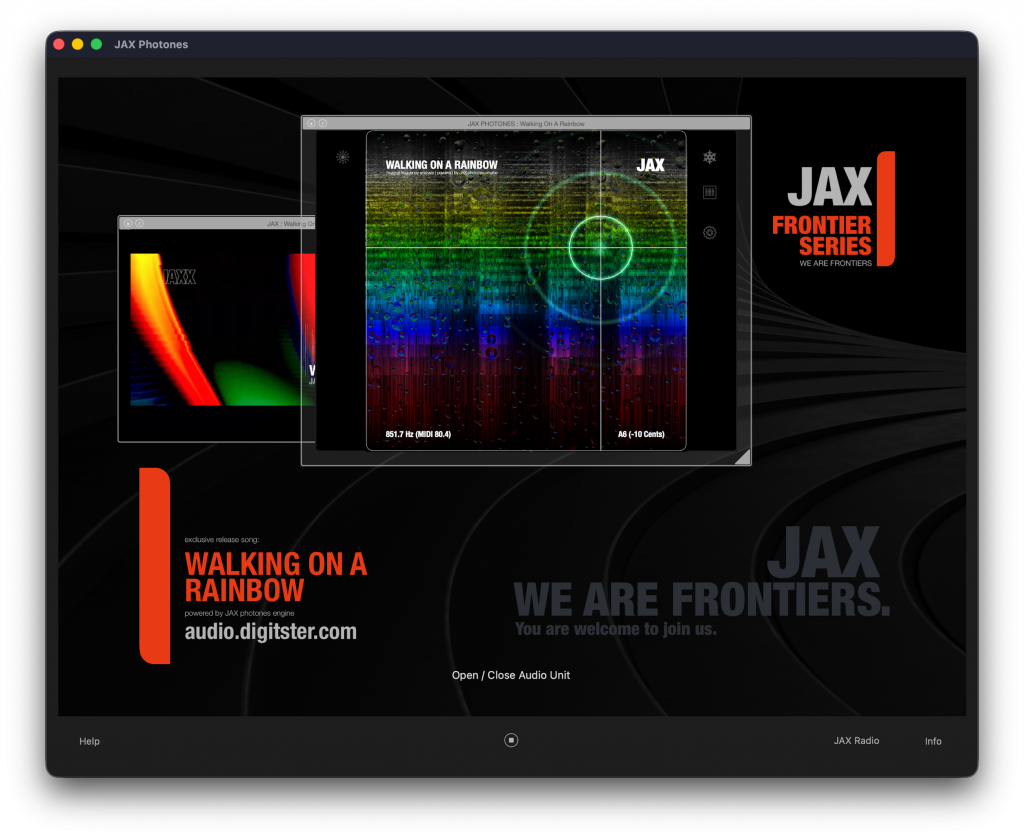
Cupertino celebrates WWDC, challenging developers to push M-series chips to their absolute limits. Yet at the gates of the App Store, the technological vanguard collides with a blind, overwhelmed review bureaucracy that no longer understands the difference between a static audio file and real-time GPU generation. The chronicle of a systemic meltdown.
An Essay by JAX Digital Audio / audio.digitster.com
Every year in June, Apple orchestrates the tech industry’s grandest high mass: the Worldwide Developers Conference (WWDC). It is (aimed to be) a festival for visionaries. On stage, the boundless architecture of M-series silicon is praised, the raw power of Metal Shaders is showcased, and developers worldwide are urged to redefine the boundaries of mobile computing.
But those who heed the call do not enter an ecosystem of innovation in June 2026—they step into a bureaucratic treadmill that incinerates excellent code on an industrial scale.
The Homage and the Trench Warfare
As a homage to the original soul of Apple—to the spirit of creativity and rebellion that once defined the iconic six-color apple logo—a multimedia experience was born after a year of intense low-level development: “Walking On A Rainbow”. A native, hardware-accelerated AudioUnit (AUv3), optimized to the absolute limits of M-series infrastructure.
What should have been a flagship showcase for Apple’s “Pro” claim turned into a traumatic moment of truth for the App Store Review.
Instead of being evaluated by experts, the app landed in the hands of front-line reviewers completely out of their depth with its technological complexity. The result was an intellectual insult: a highly sophisticated real-time DSP engine were dismissed with a canned response stating it was “merely a song that belonged on iTunes”. To make matters worse, the app was tested on castrated Mac Simulators that cannot emulate the parallel GPU pipelines and shared memory structures of physical M-chips. The resulting simulator crashes were then blamed entirely on the developer.
It took 14 days of precious creative energy, four formal appeals, and endless documentation to break through this wall of ignorance. “Walking On A Rainbow” is in the store today—not because of Apple, but despite them.
The Total Gridlock: When the Filter Eliminates the Elite
This issue is not an isolated incident; it is a systemic collapse. Right on cue for WWDC, Apple drastically tightened its App Review Guidelines (Rule 4.3) to protect the App Store from an uncontrollable deluge of cheap, AI-generated junk (“AI Slop”).
But Apple’s filters are blind. They do not differentiate between the hundredth automated flashlight clone and genuine digital alchemy.
Currently, the next flagships of the Frontier Series are trapped in a total deadlock: the JAX Kryostatic, a Performance Effect and the JAX Secret Fire Time Domain Analyser. Both apps represent the absolute pinnacle of mobile audio and graphics processing via Metal Shaders. Both are stuck deep within the App Store’s “Silent Ghosting.” Despite high-resolution physical device videos and seamless technical documentation being provided on three separate platforms, the tickets remain frozen in nirvana. Reviewers are terrified to touch the complex M-code—turning the ticket into a hot potato while the system grinds to a halt.
The Paradox of the Empire
Here, the ugly face of an aging monopolist reveals itself: Apple is sabotaging its own technology.
On one hand, the corporation builds the most powerful ARM chips in the world and demands a 30% cut for the privilege of existing on their platform. On the other hand, Apple refuses to provide its own review teams with the time, technical expertise, or physical hardware required to properly test this professional software. Those who deliver true, groundbreaking code are treated exactly like an anonymous spam bot.
When an established developer with 7 years of platform history is forced to sacrifice months of their life tilting at bureaucratic windmills instead of optimizing shaders, innovation is strangled at its core.
A Monument for Cupertino
The Death Star is shaking. Not because its finances are failing, but because its foundation is eroding: the trust of those who make the platform valuable in the first place. Laws like the Digital Markets Act (DMA) in Europe are already exposing the cracks in the fortress walls. If Apple continues to exhaust the true developer elite in bureaucratic trench warfare, the pioneers will leave the castle.
“Walking On A Rainbow” was a homage to what Apple used to be. The current reality of the App Review is a monument to what that dream has become: an overwhelmed custodian of its own algorithmic helplessness.
„The systemic collapse of the App Review is the direct consequence of a failed corporate strategy. With platforms like Apple Arcade, Apple has completely lost itself to the casual mass market. In the pursuit of quick subscription billions, they have alienated their most vital foundation: the Pro Consumers. Musicians, producers, and creators invest thousands of dollars in high-end M-series hardware, only to find that Apple is exhausting the developers of the necessary pro software in bureaucratic trench warfare. An empire that celebrates gaming subscriptions while blocking professional tools as spam has officially lost its moral compass.“
The Solution(s):
A Manifesto for the “Developer Alliance”
Apple does not have to fight the war against the AI junk wave alone. The cure for the total gridlock of the App Store Review does not lie in stricter, blind algorithms, but in a strategic alliance with the established developer elite. To save the App Store and prevent the suffocation of pro-level evolution on M-series silicon, Apple must implement three structural pillars:
- The “Proven Trust” Protocol (The Fast-Lane)
Apple holds all the historical data. Accounts that have been registered for years, deliver flawless code, and maintain verified identities must be granted a “Trusted Status.” Their updates belong on an automated fast-lane that goes live instantly. Audits and deeper reviews should happen retroactively. This would immediately clear 80% of the WWDC bottleneck. - The “Physical Device Lock” in the Review Infrastructure
Highly sophisticated low-level code (vDSP, Metal Shaders) must be structurally barred from being tested on Mac Simulators. If an app’s metadata requires exclusive M-series hardware, the internal review system must block simulator execution. These builds must automatically route to a specialized pool of reviewers equipped with physical M-series devices. - The Community as a Shield (The Review Council)
No corporation on earth can stop an automated avalanche of AI bots using line-level bureaucrats. Apple must recruit real developers as allies. Established developers should be given the power to flag obvious subscription traps and AI slop with high-priority status.
Conclusion: Do not turn your pioneers into your prisoners—make them your partners. Open the gates for an alliance that protects the true spirit of the rainbow.
MORE CONCRETE:
Apple is attempting to manage the entire App Store using a single, blunt instrument. The system is collapsing because it ignores the fundamental differences between separate app categories. Saving the ecosystem requires a radical, sector-specific alliance with the developer elite.
1. Utilizing the Existing Rating System as a Trust Index (Reputation Score)
Apple already possesses a powerful but completely neglected quality control instrument: user ratings and update history.
- The Reality: A developer who has maintained apps for 7 years, consistently rated 4.8 stars by the community with zero compliance violations, is treated exactly the same during review as an anonymous account registered yesterday.
- The Alliance Solution: Introduction of an algorithmic Reputation Score. Developers with a proven history of excellence and positive community backing must bypass the error-prone front-line review. Their updates go live via Instant-Release. Apple must trust the community that has vetted the developer for years, rather than letting uneducated reviewers block code in a simulator.
2. Radical Category Differentiation: Ending the One-Size-Fits-All Approach
You cannot evaluate a highly sophisticated real-time AudioUnit (AUv3) or a Time-Domain Shader Analyser using the same criteria as a casual mobile game or a social media app.
- The Reality: The review team dumps everything into a single bucket. A reviewer testing a dating app in the morning is expected to evaluate low-level vDSP code in the afternoon. This is the root cause of absurd rejections like “this belongs on iTunes.”
- The Alliance Solution: Segmentation of the App Store into functional Zones. The Pro-Audio and Graphics sectors require a dedicated, specialized review team composed of engineers who speak the language of Metal and CoreAudio, rather than copy-pasting canned rejections.
3. The Cultural Filter: Shielding the Niche from Subscription and Ad Pestilence
The professional creative community (musicians, producers, shader artists) operates on a completely different cultural code than the mass market. In this niche, subscriptions and in-app advertisements are hated like the plague. It relies on the classic, honest principle: Pay once, own it.
- The Reality: Apple’s guidelines practically force developers into subscription models, as they secure a perpetual 30% revenue stream for the corporation. Yet, it is precisely these subscription and ad frameworks that make AI slop and dark patterns profitable for scammers in the first place.
- The Alliance Solution: Apps that completely reject ad networks, tracking, and hidden subscriptions, opting instead for the classic premium model (one-time purchase), must be fast-tracked as “High-Integrity Software.” Those who refuse to build junk designed to rip off users must not be caught in a spam filter. By empowering the ad-free, subscription-free Pro elite, Apple would naturally dry up the swamp of AI scammers.